Mattresses · Materials and construction
Inside Vispring’s Natural Mattress Fillings: Breathability, Loft, and Support
A mattress’s spring system may carry the structural story, but the layers above it shape the first impression—and much of the night that follows. Wool, cotton, and horsetail each behave differently under warmth, moisture, pressure, and time. Understanding those distinctions can help readers look beyond a material’s name and ask what it contributes to the whole sleeping surface.
Published October 18, 2026
A mattress is a small landscape of materials. Its surface meets the body; its upholstery cushions that meeting; its support system bears the load below. In a layered design, no single component explains the full experience. A responsive spring core can provide movement and support, while the fillings above it influence softness, temperature, moisture handling, and how the surface changes as it is used.
That distinction matters when a mattress is described as natural. The phrase may sound like a verdict, but it is only a starting point. Different fibers have different structures, and those structures affect how they compress, recover, and interact with heat and humidity. Wool is not cotton; cotton is not horsetail; and a list of ingredients does not, by itself, tell a sleeper whether the finished mattress will feel right.
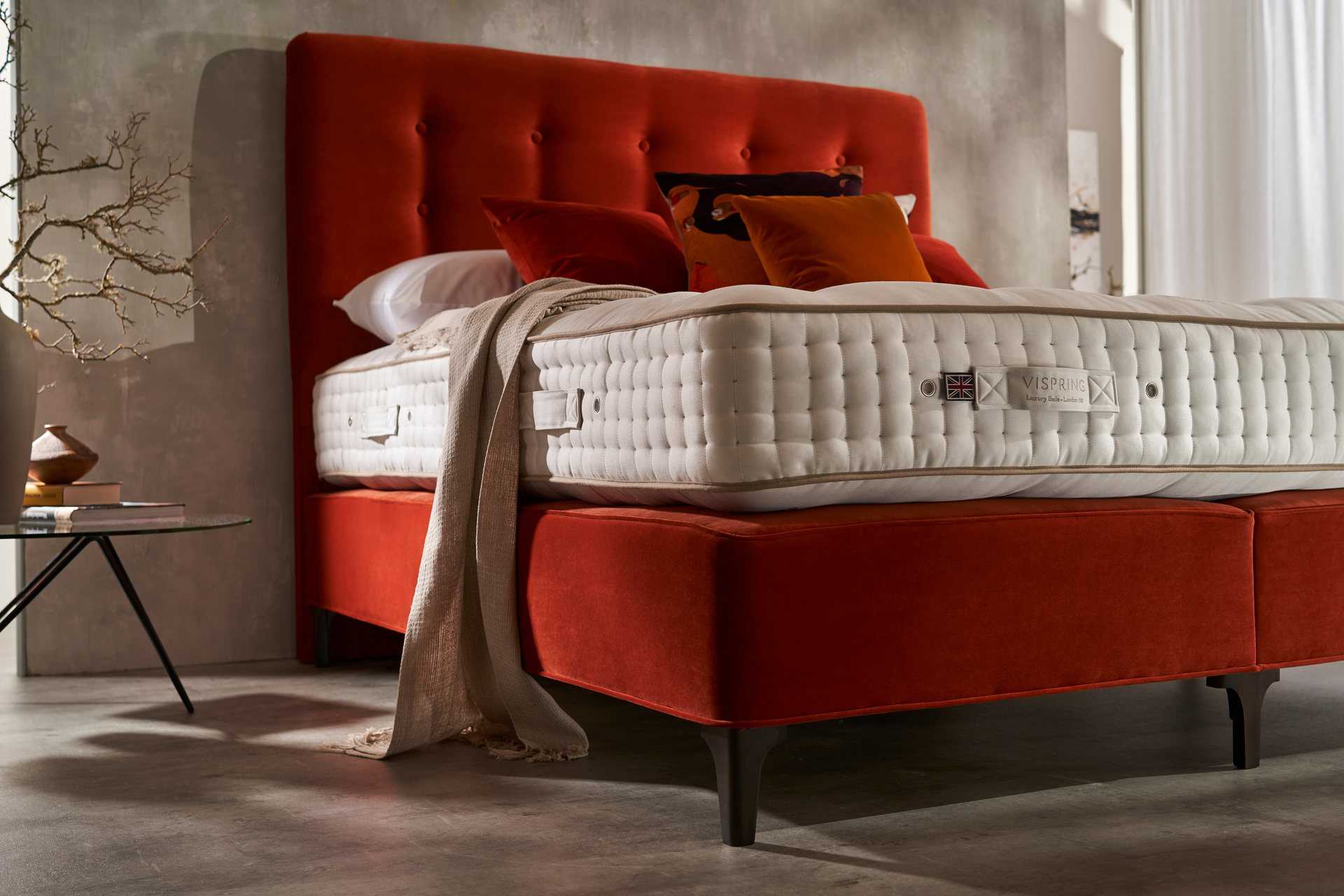
Vispring’s Signatory Superb offers one example of layered natural fillings in a mattress built around pocket springs. Its described construction places British fleece wool, hand-opened Austrian Moosburger® horsetail, Real Shetland Wool blended with cashmere, and Real Shetland Wool blended with organic cotton in sequence above a two-layer spring system. The point of examining that arrangement is not to declare a universal winner. It is to understand why manufacturers may use several materials, and what questions a consumer can reasonably ask about them.
The job of a filling layer
Comfort upholstery is not simply decorative padding. It forms a transition between the sleeper and the support beneath. A surface layer can soften initial contact, while deeper upholstery can add cushioning and help distribute pressure before the body reaches the spring system. The result depends on the material, its quantity, its arrangement, and how firmly the mattress is assembled.
Fillings also affect a mattress’s microclimate: the immediate environment between the body, bedding, and sleep surface. During the night, the body gives off heat and moisture. A mattress does not regulate body temperature in the way a thermostat does, and a breathable filling cannot guarantee that every sleeper will feel cool. But the capacity of layers to take up, release, or permit the movement of moisture and air can influence how warm or clammy the surface feels.
Finally, fillings influence loft—the thickness and springiness that help upholstery retain a raised, cushioned profile. A filling that compresses substantially may feel different after repeated use than it did on the first night. Mattress construction attempts to balance softness with resilience: enough give to cushion, enough recovery to maintain a reasonably consistent surface.
Wool: resilience and moisture management
Wool is often used in mattress upholstery because its fibers have a naturally crimped structure. That waviness can help create a resilient, springy layer rather than a completely flat mass. Wool is also commonly valued for its ability to absorb moisture vapor. In practical terms, it may take up some humidity from the immediate environment without feeling wet at once, although performance varies with fiber quality, amount, construction, and conditions in the bedroom.
These qualities make wool relevant to two concerns that are easily confused: cushioning and temperature. A wool layer can contribute softness and loft, while its moisture behavior may support a less clammy-feeling surface. Neither feature means that wool actively cools the sleeper or prevents overheating. Room temperature, sheets, blankets, sleepwear, mattress protector, and individual heat sensitivity all remain part of the equation.
In the Signatory Superb’s described sequence, British fleece wool sits beneath the ticking and is identified as a resilient layer associated with moisture regulation. Further down, Real Shetland Wool appears in blends with cashmere and with organic cotton. The repeated presence of wool does not mean each layer performs identically. Its position, blend, and relationship to adjacent materials affect the way it contributes to the finished upholstery.
For a shopper, the useful question is not simply, “Does it contain wool?” It is: where is the wool placed, what is it blended with, and what does the manufacturer say that layer is intended to do? Those details turn a raw-material label into a more informative account of construction.
Cotton: body and absorbency
Cotton is a familiar plant fiber used in textiles and upholstery. In mattress construction, it can add body and contribute to moisture absorption. Its precise feel depends on how it is prepared and combined with other materials. A cotton blend may behave differently from a dense cotton layer or a woven cotton cover, so the word alone cannot predict firmness, softness, or temperature.
In the Signatory Superb’s listed upholstery, organic cotton is blended with Real Shetland Wool in a lower filling layer. The product description presents that blend as adding body and absorptive capacity. The distinction is useful: a filling may be selected not only to make the surface feel plush, but also to give the upholstery structure and help manage moisture within the material layers.
Absorption should not be confused with unlimited moisture control. No mattress filling replaces a clean, dry sleep environment, and any material can be affected by prolonged dampness or poor ventilation. A breathable bed frame, suitable bedding, and ordinary room care may matter alongside the mattress itself. If a product’s maintenance instructions specify particular care, those should take precedence over broad assumptions about natural fibers.
Horsetail: long fibers and loft
Horsetail is a less familiar mattress filling to many consumers. In this context, the term refers to the long, naturally crimped fibers used as upholstery—not to a finished fabric or a spring. The Signatory Superb description identifies its horsetail as hand-opened Austrian Moosburger® material and says its longer fibers are intended to resist compression and maintain loft.
The principle is straightforward. Fibers that form a resilient, springy structure can help upholstery retain volume under repeated pressure. Preparation matters: opening a fiber mass can separate and arrange fibers so that they contribute more evenly to the layer. But claims about durability remain claims about a specific construction, not a promise that a mattress will never soften, settle, or require care. Every upholstered surface is subject to use, body weight, movement, and time.
Horsetail’s role is distinct from that of the steel springs below. The springs are part of the support core; the horsetail is part of the comfort upholstery. A filling layer may recover from compression and help preserve loft, while the spring system responds to load and movement. One does not substitute for the other. Considering both helps explain why mattress descriptions discuss materials above and below the surface.
It is also worth looking at the word “natural” with precision. Natural origin does not automatically settle questions of feel, care, sourcing, durability, or suitability for a particular sleeper. A buyer who has sensitivities or specific needs should seek complete material information and consult an appropriate professional where necessary, rather than treating a general material category as a guarantee.
Why the layers are arranged in sequence
A filling list can read like an inventory. A construction sequence tells a more useful story. Layers nearer the surface influence first contact; those beneath can create a softer transition into the support system; denser or more substantial upholstery may add body deeper in the mattress. In a thoughtfully assembled design, the materials work together rather than compete for a single job.
For the Signatory Superb, the description outlines wool, horsetail, a wool-and-cashmere blend, and a wool-and-organic-cotton blend, followed by two layers of pocket springs. This is one manufacturer’s approach to combining resilience, softness, and moisture handling. The exact effect for an individual sleeper cannot be inferred from the ingredient list alone. Firmness, upholstery depth, body shape, preferred sleep position, and personal temperature perception all influence how a mattress feels.
Construction details such as hand-tufting and side-stitching also help explain how a mattress is held together. The product description says woollen tufts and twine compress the fillings into a consistent depth at tuft points, while hand side-stitching firms the border. These are assembly features, not filling materials, but they matter to the way layers are secured and the surface is maintained. A detailed specification can therefore be read as a system: fiber, placement, spring design, and construction all contribute to the final object.
Breathability is a property of the whole bed
“Breathable” is one of the most persuasive words in bedding, and one of the easiest to oversimplify. A fiber may allow air or moisture to move through a layer under some conditions, but the mattress is not an isolated material sample. Ticking, upholstery density, comfort layers, protectors, sheets, blankets, and the bed base all shape the environment around the sleeper.
A closely woven cover or waterproof protector, for example, may change the feel of the surface regardless of what lies below it. Heavy bedding can retain warmth. A bed positioned in a poorly ventilated room may feel different from the same mattress in a cooler, more ventilated space. These surrounding factors do not erase the properties of the fillings; they put those properties in context.
For readers comparing products, it is useful to ask whether “breathability” refers to the cover, a particular filling, the spring construction, or the whole mattress. Ask what the material is intended to do and whether the description distinguishes moisture absorption from airflow. Clear answers are more helpful than a broad promise of cool sleep, especially because temperature comfort varies from person to person.
Loft, settling, and long-term comfort
Loft is easy to notice in a pillow and less visible inside a finished mattress. It refers to the volume and resilience of a filling—the quality that gives upholstery its depth and helps it recover after pressure. A mattress that feels welcoming in a showroom may change as its materials respond to regular use. Some settling is a normal possibility in upholstered products, but the degree and pattern depend on design, materials, and use.
That is why durability claims deserve careful reading. Long fibers, crimp, springy structure, and skilled assembly may be part of a manufacturer’s rationale for choosing a filling. They do not make every mattress impervious to change. Consumers can compare construction descriptions, warranty terms, care guidance, and return policies without assuming that one material guarantees a specific lifespan.
Comfort is also not a simple contest between soft and firm. A sleeper may prefer a cushioned top with substantial support below, or may find that combination too yielding. Side sleepers often pay close attention to pressure at the shoulder and hip; back and stomach sleepers may prioritize a different balance. These are tendencies, not rules. Body proportions, sleep habits, and individual comfort all matter, and a material name cannot replace trying a mattress when a suitable opportunity exists.
How to compare natural mattress fillings
A practical comparison begins with questions rather than superlatives. When a mattress lists wool, cotton, horsetail, or other fibers, consider the following:
- Where is each material placed? Surface layers and deeper upholstery can have different functions.
- What is it blended with? A blend may change texture, body, resilience, or moisture behavior.
- What does the maker say it contributes? Look for specific descriptions such as cushioning, loft, or absorbency rather than relying on a generic natural label.
- How does it work with the support core? Fillings shape the surface; springs or other core materials provide much of the underlying support.
- What is the complete feel likely to be? Firmness, upholstery depth, and construction matter as much as the ingredient list.
- What are the care and warranty terms? These clarify expectations without relying on assumptions about a material’s durability.
- How might the rest of the bed affect temperature? Bedding, protectors, room conditions, and bed bases influence the sleep environment.
This framework helps separate substance from shorthand. “Wool mattress” may describe a mattress with a small amount of wool in the cover or one with wool throughout several upholstery layers. “Natural fillings” can include materials with very different structures and behaviors. The meaningful comparison is between complete constructions, not isolated labels.
A case study, not a universal formula
The Vispring Signatory Superb illustrates how a manufacturer can combine several fibers with a layered spring system. Its listed materials include wool and silk in the ticking, British fleece wool, Austrian Moosburger® horsetail, blends of Shetland wool with cashmere and organic cotton, and two layers of hand-nested pocket springs. The description gives each material a place in a sequence, rather than presenting “natural” as a single, self-explanatory feature.
That specificity makes the mattress useful as an example, but not as a prescription. Another sleeper may prefer a different surface feel, a different firmness, or another approach to temperature and support. Even within a single model, the way a mattress feels can vary with size, base, bedding, and the person using it. A product description can explain design intent; only careful evaluation can establish whether the result suits an individual.
The broader lesson extends beyond this particular model. When evaluating mattress materials, ask how fibers are prepared, where they sit, how they are combined, and what role they play alongside the support system. Pay attention to the distinction between a stated material property and a promised personal outcome. That is a more reliable route through the language of comfort than choosing by ingredient alone.
The quiet work of materials
Mattress fillings rarely receive the attention given to springs or firmness ratings, yet they shape the boundary between the sleeper and the structure below. Wool can contribute resilience and moisture handling. Cotton can add body and absorbency. Long, crimped horsetail fibers may help create a lofted, resilient layer. Their effects depend on how they are prepared, combined, and placed.
None of these fibers can guarantee a perfect night, a particular temperature, or lasting comfort for every person. They can, however, help explain why two mattresses with similar support systems may feel different. The most useful approach is to treat natural fillings as working parts of a larger design: examine the layers, consider the whole bed, and match the construction to personal comfort rather than to a label.