Mattresses · Construction and support
How Vispring’s Dual-Layer Pocket Springs Shape Mattress Support
A mattress spring system is more than a count on a specification sheet. Its arrangement influences how a sleep surface yields under pressure, steadies the body and responds when a partner moves. In a dual-layer pocket-spring design, two sets of individually encased springs work together beneath the comfort materials, creating a support system that responds locally rather than shifting as one broad unit.
Published November 4, 2026
Mattress support is often described in shorthand: soft, firm, medium, responsive. Useful as those words can be, they compress a complicated experience into a few labels. What a sleeper feels is the result of multiple elements acting together: the spring unit or other support core, the cushioning above it, the materials that cover it, and the sleeper’s own body, posture and preferences.
Pocket springs are one way of building that support core. Each spring sits inside its own fabric pocket, allowing it to respond more independently than springs connected into a single linked unit. A dual-layer design adds another set of pocket springs beneath or alongside the first. The intention is not simply to double a number. It is to create a layered response in which pressure is taken up across a depth of individually moving components.
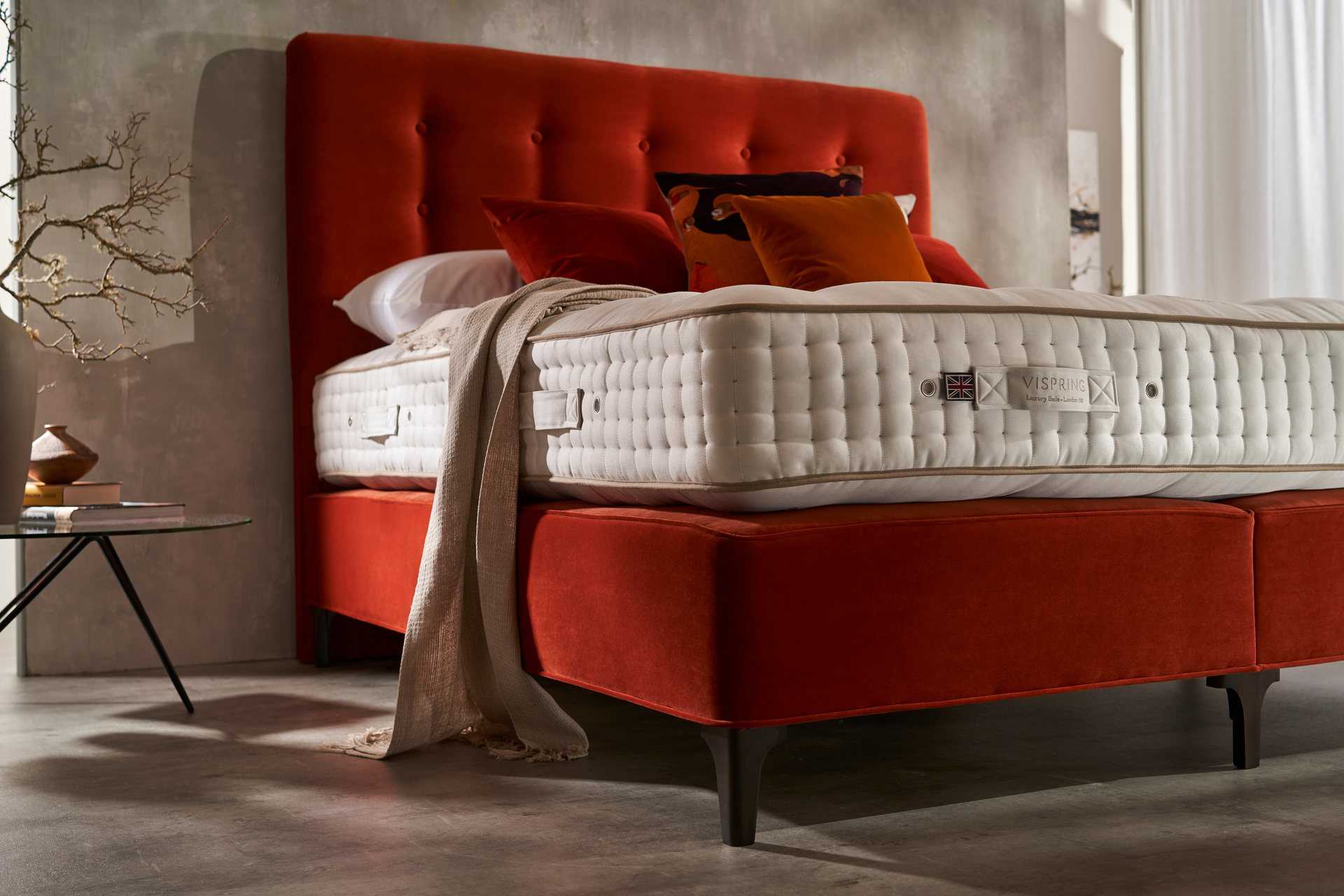
Vispring’s Signatory Superb provides a specific example of this construction. Its spring system uses two layers of hand-nested, vanadium steel calico pocket springs. The maker lists 3,296 springs in a king size. That figure describes one size and one model; it should not be treated as a universal measure of mattress quality. To understand what the architecture may mean in practice, it helps to look beyond the count and consider how pocket springs behave, how layers interact and what shoppers can evaluate for themselves.
What makes a pocket spring independent?
In a pocket-spring mattress, each coil is enclosed in a fabric sleeve. The pocket gives the spring room to compress without requiring every neighboring coil to move in precisely the same way. When a person lies down, the springs beneath the body bear the greatest immediate load, while springs farther away may move less. This localized response is the central idea behind independent springs.
“Independent” does not mean isolated from every other part of the mattress. The springs are contained within a common structure, and the upholstery above them spreads and softens pressure. The mattress’s cover, fillings, stitching and edge construction also affect how the surface behaves. Still, separate pockets can limit the broad, linked movement associated with some other spring arrangements.
That distinction can matter in two familiar situations. First, a sleeper changes position or places weight on a particular part of the bed. A pocketed unit can compress more directly beneath that load instead of drawing a wide area down with it. Second, one partner moves while the other is resting. A system designed to respond locally may reduce the extent to which movement travels across the surface, although no spring construction can guarantee that a partner will never feel motion.
The experience varies. A mattress is not a laboratory instrument that produces the same result for every body. Differences in body weight, sleep position, the distance between partners and the comfort layers above the springs can all affect perceived motion and support. A specification can describe a design, but it cannot fully predict an individual night’s sleep.
Why put two spring layers together?
A single layer of pocket springs supplies a responsive foundation. Adding a second layer gives the support core more depth and creates an additional stage of compression. Rather than asking one spring layer to account for the entire load, a layered arrangement can distribute the work through more than one plane of springs.
That does not mean every dual-layer mattress feels firmer, softer or more supportive than every single-layer model. Layer count alone cannot answer those questions. Spring dimensions, wire characteristics, pocket construction, spring density, filling materials and the mattress’s overall profile all influence the result. Two mattresses with two spring layers may feel markedly different from one another; likewise, a well-designed single-layer system may suit a particular sleeper better than a more elaborate construction.
Think of the layers as a coordinated structure rather than a simple stack of identical parts. The upper layer is closer to the sleeper and may register changes in pressure first. The lower layer contributes depth and helps sustain the response as weight is applied. The combined behavior depends on how the layers are specified and assembled, as well as on the materials placed above and around them.
In Vispring’s Signatory Superb, the two layers are described as hand-nested pocket springs made from vanadium steel and enclosed in calico. The manufacturer’s account places the springs within a wider assembly of natural upholstery materials, including wool, horsetail, cashmere and cotton. Those fillings are not incidental to the feel. They form the transition between the sleeper and the spring system, affecting cushioning, surface resilience and temperature management.
Support is a system, not a spring count
Spring totals attract attention because they are easy to compare. But a higher number by itself does not establish that a mattress offers better alignment, greater durability or superior comfort. The size of the mattress matters: a larger model will commonly contain more springs than a smaller one. The arrangement, spring characteristics and the rest of the construction matter too.
Support is best understood as the way a mattress helps the body settle into a comfortable position without excessive sinking or uncomfortable pressure. A person sleeping on their side may need enough cushioning at the shoulder and hip, while also wanting the trunk to remain comfortably supported. A back sleeper may look for a surface that feels stable beneath the lower back and hips. A stomach sleeper may be particularly attentive to whether the pelvis sinks too far. These are broad considerations, not medical rules, and personal comfort remains essential.
Nor is support synonymous with firmness. A firm surface can still feel wrong if it does not accommodate the sleeper’s shape or preferred position. A softer surface can provide a supportive experience when the underlying construction and comfort layers work well together. Ratings such as “medium” and “firm” are not perfectly standardized across manufacturers, so direct comparison calls for more than matching the label.
For that reason, consider the entire build. Ask what sits above the springs, how thick the comfort layers are, how the mattress is finished at the perimeter and whether the construction is intended to be used with a particular base. In a product such as the Vispring Signatory Superb, the pocket springs are one part of a design that also includes layered upholstery and a side-stitched border. Each element can influence how the surface feels and how much of it is usable.
Motion response and sharing a bed
When two people share a mattress, movement becomes part of the support question. A partner turning over, getting out of bed or shifting position can send vibrations through a sleep surface. Pocket springs are often chosen for their capacity to respond more locally than interconnected spring systems, which may help contain some movement near its source.
A dual-layer pocket system adds complexity to that response, but it should not be treated as a promise of complete motion isolation. The fabric pockets, the connection between layers, the upholstery and the mattress base all contribute to how movement travels. The size and force of the movement matter as well. A gentle adjustment and a quick rise from the edge are different events.
When possible, couples can evaluate motion together rather than relying solely on a feature description. One person can lie in a usual sleeping position while the other changes position at a normal pace. The purpose is not to stage an extreme test, but to notice whether ordinary movements are distracting. It can also help to compare the mattress with the type of foundation intended for it, because an unsuitable or unstable base may change the overall feel.
Materials above the springs shape the first impression
The spring unit may provide the underlying response, but sleepers do not lie directly on bare coils. Comfort layers influence the first sensation of softness or firmness, how pressure is distributed at contact points and how quickly the surface rebounds. The same spring system can feel different when paired with different upholstery.
The Signatory Superb’s described construction illustrates this point. Its ticking combines wool, silk and viscose. Beneath that, the upholstery includes British fleece wool, hand-opened Austrian Moosburger horsetail, Real Shetland Wool blended with cashmere, and a blend of Real Shetland Wool and organic cotton. The manufacturer describes these layers as contributing resilience, moisture regulation, loft and a softer transition to the springs.
Natural fibers and plant- or animal-derived fillings are often selected for their distinctive texture and moisture-handling properties. Their presence does not automatically mean a mattress will suit every sleeper, nor does a materials list reveal exactly how the surface will feel. The thickness, arrangement and density of the layers matter. So do room conditions, bedding, personal temperature sensitivity and the sleeper’s preferred level of cushioning.
For a shopper, the practical question is how the full assembly behaves under the body. Does the surface provide enough cushioning at contact points? Does it feel easy to move on? Does it retain a comfortable temperature in the conditions where it will be used? These questions cannot be answered by the spring specification alone.
The role of edge construction
Support is not confined to the middle of the mattress. The perimeter affects how stable the edge feels when someone sits down, rises or sleeps near the side. Some mattresses use reinforced borders or other edge-support measures to help limit compression around the boundary.
The Signatory Superb is described as having a border upholstered with coir and wool and secured with four rows of hand side-stitching. Such details are part of the mattress’s construction, not a separate guarantee of performance. Edge feel can depend on the border design, the underlying spring unit, the foundation and the sleeper’s weight and position. A person who regularly sits on the edge may value this feature differently from someone who uses the center of the bed most of the time.
During an in-person assessment, sit on the edge briefly and then lie near it in a natural position. Notice whether the boundary feels stable enough for ordinary use. Avoid judging edge support only by pressing down with a hand; the way a mattress responds to a concentrated hand pressure may differ from how it supports a person’s weight across a larger area.
What to compare when shopping
Comparing mattress construction is easier when the questions are specific. Instead of asking only how many springs a model contains, look at how the system fits your needs and how the manufacturer explains its components.
- Spring arrangement: Is the support core pocketed, linked or built from another system? If there are multiple layers, how are they described?
- Comfort materials: What lies between the body and the springs, and how might those materials affect cushioning, surface feel and temperature?
- Firmness and sleep position: Does the mattress feel suitable when tested in the position you normally use, rather than only when pressed by hand?
- Movement: If sharing a bed, how noticeable are ordinary partner movements during a realistic trial?
- Perimeter: Does the edge feel stable when sitting and lying near it?
- Base compatibility: What kind of foundation does the maker recommend, and could the base alter the feel or support of the mattress?
- Care and durability information: What maintenance is required, and what does the warranty actually cover? Read the terms rather than relying on general claims.
Where a showroom trial is available, spend enough time to settle into the mattress. A brief sit may reveal little about how the surface feels after several minutes in a normal sleeping posture. If testing in person is not possible, check the retailer’s trial, return and delivery terms before committing. Policies differ, and their conditions can be as important as the product description.
Questions worth asking about dual-layer springs
Technical descriptions are most useful when they are clear enough to compare. Shoppers can ask whether the stated spring count applies to a particular size, whether both layers use pocketed springs, and what the maker means by “independent” or “responsive.” It is also reasonable to ask how the upholstery is arranged over the spring unit and whether the mattress is designed for a specific type of base.
These questions help distinguish concrete construction details from broad claims. “Two layers” tells you that the support unit has a layered architecture; it does not, by itself, tell you the exact feel, suitability for a health condition or expected lifespan. A responsible comparison keeps those limits in view.
It is also useful to separate preference from performance. One sleeper may value a buoyant, easy-to-move surface; another may prefer more cushioning. Neither preference can be settled by spring count. If pain, numbness or persistent sleep disruption is involved, mattress selection is not a substitute for medical advice. A mattress may affect comfort, but it cannot diagnose or treat a condition.
A closer look at Vispring’s example
The Signatory Superb brings together several features that make it useful as an example of a layered pocket-spring mattress: two hand-nested spring layers, a listed king-size total of 3,296 springs, natural-fiber upholstery, hand tufting and a reinforced, hand side-stitched border. The design is presented as a coordinated whole, with the fillings shaping the surface above a responsive spring foundation.
That combination may appeal to shoppers interested in traditional, material-rich mattress construction, but the specifications are not a substitute for personal assessment. The mattress’s feel will depend on body characteristics, sleeping position, expectations and the base beneath it. Its construction can be described objectively; whether it is the right choice is individual.
It is also worth resisting the temptation to treat craftsmanship language as a performance score. Hand-nested springs and hand tufting describe methods of assembly. The practical questions remain familiar: Does the mattress feel comfortable? Does it provide the kind of response you prefer? Can you move naturally? Is the edge stable enough for your routine? Does the total construction meet your requirements and budget?
The bottom line
Dual-layer pocket springs offer a way to build depth into a mattress support core while preserving the localized response associated with individually pocketed coils. Two spring layers can work together to absorb pressure and respond to movement across the sleep surface, but their effect depends on the entire mattress: spring design, upholstery, border, dimensions and foundation.
For mattress shoppers, the meaningful comparison is not simply one spring total against another. Look at how the springs are arranged, what materials surround them and how the mattress behaves under your own body. Pay attention to comfort in your usual sleeping position, movement when sharing a bed and stability around the edge. Specifications can explain the architecture; a careful assessment helps determine whether that architecture suits the sleeper.