Bedroom Planning
How Malouf Adjustable Bases Fit into Everyday Bedroom Layouts
An adjustable base changes how a bed occupies a room. Its footprint may resemble a conventional foundation, but its moving sections, controls, power needs, and clearances call for a little more thought before furniture is placed. A practical plan starts with the room itself—and with the particular base and mattress being considered.
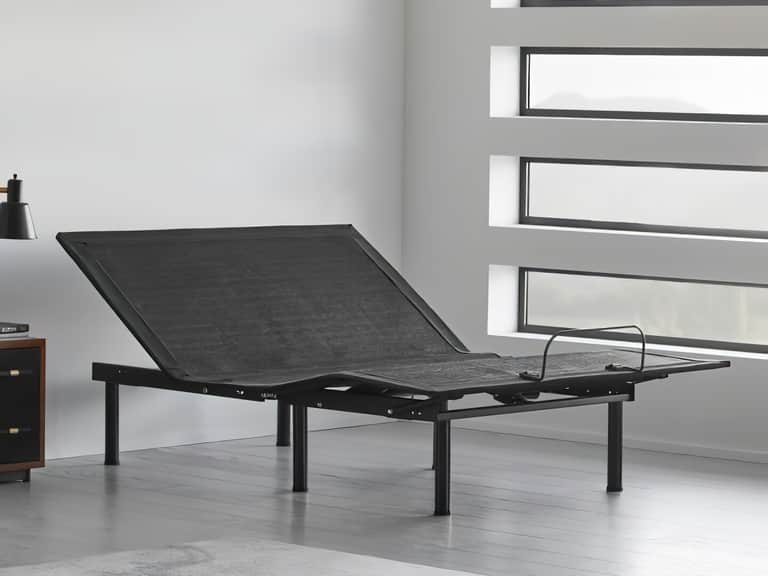
For many bedrooms, the bed is the largest piece of furniture and the center of the daily routine. An adjustable base makes that central piece dynamic: the head can rise for reading, the foot can lift for rest, and the sleeping surface can return to flat when the day is done. That movement can add flexibility, but it also changes the questions involved in arranging the room.
With Malouf adjustable bases, as with adjustable bases generally, the useful starting points are straightforward: confirm the dimensions, check mattress compatibility, identify where power and controls will be used, and leave sufficient space for access. Those details matter more than an idealized floor plan. A bed that fits on paper may still make a closet difficult to reach, put a remote out of reach, or leave too little room to move around the frame.
This guide focuses on the practical relationship between an adjustable base and the everyday bedroom—not on a single perfect arrangement. Rooms differ, furniture varies, and base features are model-specific. Checking the manufacturer’s specifications for the exact model remains essential before making decisions about placement or setup.
Start with the room’s usable dimensions
Measure the bedroom before moving furniture or choosing a base. Note the length and width of the floor area, but also record doors, closets, windows, radiators, outlets, and any built-in features. A bed may technically fit in a room while blocking a door swing or narrowing the route to a wardrobe. A clear plan considers how people actually move through the space.
Next, measure the intended bed location and the route by which the base will reach it. Hallways, staircases, turns, and door openings can be as important as the final footprint. If the bed will be assembled in the bedroom, account for the area needed to position components and work safely. Product information may describe a base as foldable or designed for straightforward setup, but the space and access requirements of a specific home still need to be checked.
- Measure the room’s length and width, including alcoves or unusual angles.
- Mark door swings, closet access, windows, and fixed obstacles.
- Measure the bed’s proposed footprint and leave room for bedside access.
- Check the path from the entry to the bedroom for turns and narrow points.
- Consider whether other furniture can be opened, reached, and used once the bed is in place.
It can help to sketch the layout to scale or mark the proposed bed outline on the floor with painter’s tape. Then walk the routes around it. This simple test can reveal a cramped passage or awkward furniture relationship before anything is assembled. Leave enough space to make the bed, retrieve items, and use the controls without having to move other furniture each time.
Understand the base’s footprint and movement
The base’s flat dimensions are only part of the layout. An adjustable frame changes shape as its sections move, so a nearby nightstand, wall, or headboard may become an obstruction. The mattress also shifts in relation to the room as the head or foot rises. Allowing space for movement is therefore part of planning, not an afterthought.
Check the model’s specifications for its dimensions and recommended placement. If the product information provides details about clearance or supported setups, use those details rather than relying on assumptions drawn from a different adjustable bed. Models can differ, and a base that works in one furniture arrangement may not be suitable for another.
Pay particular attention to the head of the bed. A headboard, wall-mounted shelf, lamp, or artwork positioned close to the mattress may be affected when the head section rises. A bedside table should be placed so that it remains useful without interfering with movement. Keep fragile objects, loose cords, and items that could fall away from moving sections.
The foot end deserves a similar check. A bench or storage chest that sits close to the bed may restrict movement, while a rug can bunch or shift if it catches on the base or bedding. Leave a comfortable gap between the foot of the mattress and nearby furniture, and verify that any floor covering stays clear of the moving mechanism.
Confirm mattress fit and compatibility
Mattress fit is a central part of adjustable base compatibility. The base and mattress must be appropriate for one another in dimensions and construction. A mattress designed to flex with an adjustable foundation can behave differently from one intended for a fixed platform. Check the mattress maker’s guidance as well as the base specifications before pairing them.
Size labels alone are not enough. Confirm the actual dimensions, especially when comparing a standard king with a split king configuration. The Malouf E255 product information, for example, notes that a split king consists of two Twin XL beds, while a king is described as 76 by 80 inches. Those figures are specific to the listed product information; verify the precise measurements and configuration for the base under consideration.
Also consider how the mattress is secured and supported. Follow the manufacturer’s instructions about retaining features, placement, and any required foundation or frame. A mattress that shifts as the base changes position can be uncomfortable and may affect how bedding stays in place. Do not assume that every mattress or surrounding frame is compatible simply because the dimensions appear close.
For readers comparing models, the Malouf E255 Adjustable Bed Base is one example of a base with independent head and foot adjustment. Its product information describes preset positions, programmable positions, and a wireless remote. These features may shape how someone uses the bedroom, but dimensions, mattress fit, and placement requirements should still be confirmed for the exact configuration.
Plan for outlets, cords, and controls
Adjustable bases need a suitable power arrangement. Before settling on the bed’s position, identify nearby outlets and consider how the power cord will reach without crossing a walking path or being trapped behind furniture. Follow the product’s instructions for electrical connection and cord routing. Avoid improvised extensions or arrangements that create trip hazards or place pressure on cables.
Think about the controls in the context of daily use. A wireless remote is most helpful when it can be found and reached from the bed. Choose a nightstand or other stable location for it, and make sure the surface remains accessible when the bed is raised. If a model uses an app or other connected controls, consider whether a phone will be kept nearby and whether that adds clutter to the bedside area.
Some adjustable bases include additional features, such as charging ports or under-bed lighting. Their presence and location vary by model. When they are included, allow access to them in the layout rather than placing a dresser or storage bin directly in front. For a specific base, use its own feature list and manual: details from one Malouf model should not be assumed to apply to another.
Choose a position that supports everyday routines
Bedroom layout is not just geometry. It is also a sequence of ordinary actions: getting in and out of bed, reading, charging a device, opening a drawer, changing bedding, and walking across the room at night. A good arrangement makes those actions straightforward in both the flat and raised positions.
Before finalizing the placement, consider which side of the bed is used most often and where bedside essentials belong. Keep frequently used items within reach, but avoid filling the area around the base with objects that could interfere with its operation. If two people share the room, discuss where each person will access controls and whether the layout leaves each side equally usable.
Movement around the bed matters particularly in compact bedrooms. A base does not have to sit perfectly centered if centering would block a closet or narrow a passage, but any offset should preserve comfortable access. Balance may be achieved through lighting, bedside furniture, or storage choices rather than by forcing the bed into a position that makes the room harder to use.
Coordinate the base with bedroom furniture
Adjustable bases may be used in different setups, but the right arrangement depends on the model’s instructions. The E255 product information describes placement on a bed foundation, platform bed, slat foundation, or directly on the ground. That description is specific to the E255 listing and should not be treated as a universal rule for all bases, frames, or mattresses.
If using an existing platform bed or slatted frame, confirm that the base is intended to work with it and that the furniture can support the arrangement. Check for fit, stability, clearance, and any manufacturer requirements. A frame may look spacious yet include rails or crosspieces that affect how an adjustable base sits. When the documentation is unclear, consult the base or frame manufacturer before placing one inside the other.
Headboards and footboards also deserve a close look. Their position and construction can constrain movement or change how the bed appears when elevated. Measure the space between the mattress and the headboard, and check whether the base’s movement alters that relationship. Avoid attaching or modifying furniture unless the relevant instructions permit it.
Make room for bedding and under-bed access
Bedding can affect the experience of using an adjustable base. Sheets need enough flexibility and correct sizing to remain properly fitted as the mattress changes position. Extra layers, heavy covers, or decorative pieces may shift or gather when the head or foot is raised. Try the intended bedding arrangement through the range of positions described by the product instructions and adjust it if it catches or pulls.
Bed skirts and other finishing layers need particular consideration. A skirt that hangs close to the floor could touch moving parts or be disturbed by the base’s movement. Its attachment method and dimensions should suit the frame and the space beneath it. If a bed skirt is part of the room’s design, check its drop and compatibility rather than assuming it will drape the same way as it does on a fixed bed.
Under-bed storage may also be affected. The clearance and available storage space depend on the base, frame, and position of the bed. Do not place boxes where they could touch moving components or obstruct required access. Consult product instructions to understand what can safely be kept under or around the base.
Keep the room adaptable and safe
A bedroom changes as routines and needs change. A layout that works today should also leave some room for adjustment: a different bedside table, a new lamp, or easier access to storage. Adjustable bases already make one part of the room more flexible, but that benefit is best preserved when surrounding furniture is not packed tightly against the bed.
Keep walking paths clear, secure loose cords, and place objects where they cannot fall onto the moving surface. If children or pets use the room, review the manufacturer’s safety instructions and any controls or features relevant to the household. Product-specific safety details matter; do not infer safeguards from another model’s description.
After setup, test the bed through its available positions while observing the surrounding space. Watch for contact with a wall, headboard, nightstand, rug, or cable. Check that the mattress remains properly positioned and that the remote is reachable. If anything catches, shifts, or blocks access, revise the layout before treating the arrangement as complete.
A practical pre-setup checklist
Before placing a Malouf adjustable base, a short checklist can prevent the most common layout problems:
- Measure the room, bed location, doorways, and route into the bedroom.
- Confirm the base’s exact dimensions and configuration from its current specifications.
- Check that the mattress is compatible with the base and is the correct size.
- Review instructions for placement on a foundation, platform, slats, or other support.
- Identify a safe outlet location and plan a clear route for power cords.
- Leave room around the head and foot for movement and everyday access.
- Position nightstands, lamps, rugs, and storage so they do not obstruct the base.
- Consider how bedding and any bed skirt will behave when the bed is raised.
- Test controls and movement after setup, then adjust the layout if needed.
The best layout is the one that works in motion
Planning around an adjustable base is ultimately an exercise in seeing the bedroom in more than one state. The flat bed is only the starting view. A useful layout also accounts for raised positions, reachable controls, clear walking routes, compatible bedding, and safe access to power.
Malouf adjustable bases can support different routines, from reading to resting, but the practical fit depends on the specific model, mattress, and room. Measure first, consult the relevant specifications, and test the arrangement with movement in mind. A few deliberate checks can help the bed function as intended while leaving the rest of the room comfortable, accessible, and easy to live in.